


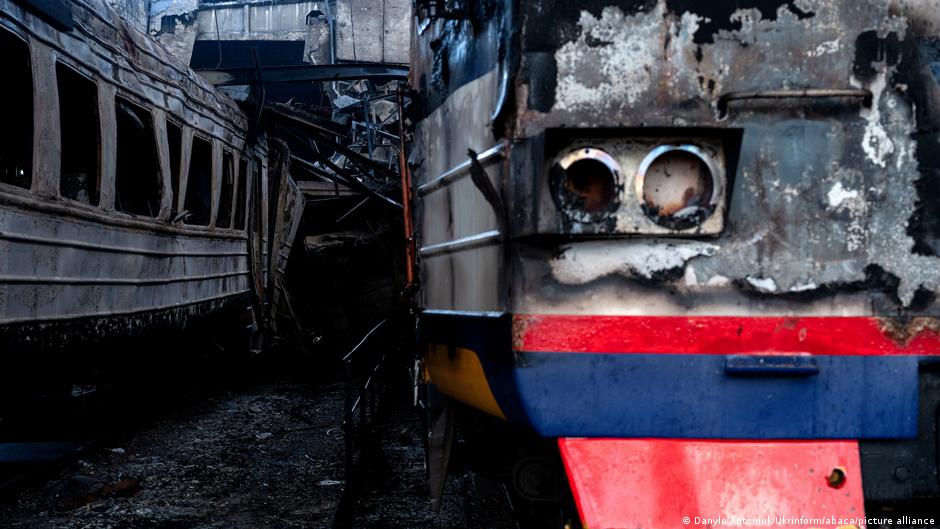
Escalation of Drone Warfare in Ukraine
In recent weeks, Russia has intensified its drone attacks on Ukraine's railway systems, marking a significant escalation in its military strategy. This development has raised alarms not only for Ukraine's immediate security but also for its broader economic stability. Railways are vital for transporting goods and resources, and their disruption could have far-reaching implications for the Ukrainian economy, which is already under strain from the ongoing conflict.
Strategic Objectives Behind the Attacks
The Russian military's focus on Ukraine's railways appears to be a calculated move aimed at crippling the country's supply lines. By targeting key transport routes, Russia seeks to hinder Ukraine's ability to mobilize troops and resources, thereby undermining its defensive capabilities. Moreover, the rail network is integral to the transportation of agricultural products, which are critical to Ukraine's economy and global food supply. As such, these drone strikes could have implications that extend beyond the battlefield.
Operational Tactics and Technology Utilized
Russia's drone attacks have employed a range of tactics and technologies, reflecting an adaptation to the realities of modern warfare. Drones provide a level of precision and flexibility that traditional artillery cannot match, allowing for targeted strikes on specific railway junctions and infrastructure. Reports indicate that Russia has been utilizing both commercially available drones and sophisticated military-grade UAVs to execute these operations. The ability to launch attacks from a distance minimizes the risk to Russian personnel, complicating Ukraine's defensive responses.
Impact on Ukraine's Economy
The economic ramifications of these drone strikes are significant. Disruptions to the railway system can lead to delays in the transportation of goods, increased costs for logistics, and a ripple effect on industries reliant on timely deliveries. Additionally, the agricultural sector, a cornerstone of Ukraine's economy, faces threats as rail disruptions hinder the export of grain and other commodities. As Ukraine strives to maintain its economic resilience amid ongoing hostilities, these attacks pose a direct challenge to its recovery efforts.
International Response and Support
As the situation escalates, the international community's response becomes increasingly critical. Ukraine has received varying degrees of support from Western allies, including military aid and economic assistance. However, the effectiveness of this support in countering Russia's drone capabilities remains to be seen. Enhanced defense systems and intelligence-sharing could play pivotal roles in mitigating the impact of these strikes. Ukraine's ability to secure additional resources and technology will be crucial in fortifying its defenses against aerial assaults.
Potential Countermeasures and Challenges
In light of the ongoing drone attacks, Ukraine faces the pressing challenge of developing effective countermeasures. This includes investing in advanced air defense systems capable of intercepting drones before they reach their targets. However, the implementation of such measures is fraught with difficulties, including logistical challenges and the need for rapid deployment. Additionally, the sheer volume of drone attacks complicates defensive strategies, as Ukraine must prioritize its resources amidst a multitude of threats.