


Institutional Investment Trends in Q1
In the first quarter of the year, institutional investors have demonstrated a pronounced interest in technology stocks, particularly those of Micron Technology and Intel. This shift underscores a strategic pivot towards companies positioned to benefit from the burgeoning artificial intelligence (AI) sector. As institutional players recalibrate their portfolios, the implications for market dynamics are significant, particularly within the semiconductor industry.
Micron Technology: A Focus on Memory Solutions
Micron Technology, a leader in memory and storage solutions, has seen a notable uptick in stock prices as institutional investors increase their holdings. The company’s advancements in DRAM and NAND flash memory technologies have positioned it favorably in a market increasingly driven by AI and data-intensive applications. Investors are betting on Micron’s ability to capitalize on the growing demand for high-performance computing, which is essential for AI workloads.
Furthermore, Micron's strategic initiatives to expand its production capabilities and invest in cutting-edge technologies have attracted attention. The company’s recent announcements regarding new manufacturing facilities and partnerships to enhance its supply chain resilience signal a proactive approach to meeting future demand, which is a critical factor for institutional investors assessing long-term growth potential.
Intel: Reinventing Its Market Position
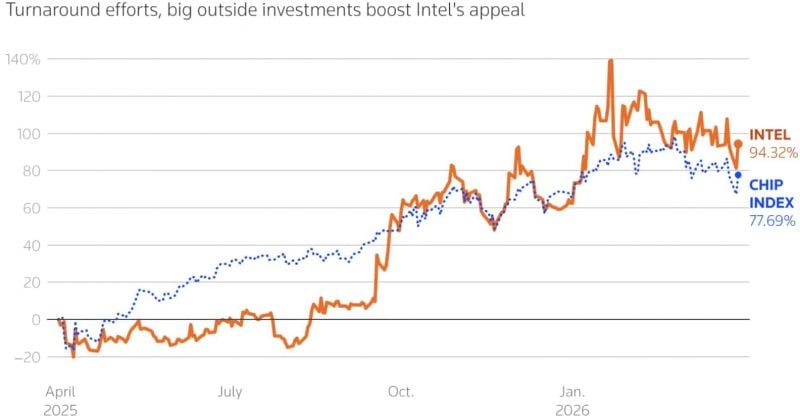
Intel, once the dominant force in the semiconductor industry, has faced intense competition and market pressures in recent years. However, the company's renewed focus on AI and data centers has reignited interest among institutional investors. Intel's recent investments in AI infrastructure and its roadmap for new chip architectures designed specifically for AI applications have positioned it as a key player in this transformative sector.
Moreover, Intel's commitment to revitalizing its manufacturing capabilities through significant capital expenditures has been met with optimism. The company’s plans to expand its foundry services and collaborate with other tech giants are seen as essential moves to regain market share and enhance competitiveness. As institutional investors recognize Intel’s potential for recovery and growth, the stock has experienced a resurgence in value.
Market Dynamics Influenced by Institutional Interest
The increased institutional investment in Micron and Intel is indicative of a broader trend within the market, where large investors are increasingly favoring technology sectors that are poised for growth. This trend reflects a growing belief that AI will drive future economic growth, prompting institutions to allocate capital towards companies that are well-positioned to benefit from this shift.
As institutional investors accumulate shares in these tech giants, their influence on stock prices is likely to continue. This influx of capital can create a feedback loop, where rising stock prices attract further investment, leading to enhanced liquidity and market stability. The impact of such dynamics can be profound, particularly in the semiconductor sector, which serves as the backbone for numerous technology innovations.
Implications for the Semiconductor Sector
The semiconductor industry is at a critical juncture, with demand for chips expected to surge across various applications, from consumer electronics to automotive technologies. The increasing adoption of AI technologies is driving this demand, as companies seek to harness data for insights and automation. Institutional investors are keenly aware of this trend, as evidenced by their strategic positioning in Micron and Intel.
As these companies ramp up production and innovate in response to market needs, they are likely to play pivotal roles in shaping the future landscape of technology. Institutional investors are not only focusing on current performance but are also considering the long-term potential of these companies to adapt and thrive in an evolving market.
The Role of AI in Shaping Future Investments
The acceleration of AI adoption across industries has prompted institutional investors to reevaluate their strategies. Companies that are integral to the AI supply chain, like Micron and Intel, are being viewed as vital players in this new technological era. As AI continues to permeate various sectors, the demand for robust computing power and efficient memory solutions is expected to rise exponentially.
Institutional investors are increasingly looking for companies that not only have a strong current performance record but also a clear vision for integrating AI into their business models. This focus on AI-driven technologies is reshaping investment strategies, encouraging a shift towards firms that can innovate and adapt in a rapidly changing environment.
Potential Risks and Considerations
While the surge in institutional investment in Micron and Intel presents opportunities, potential risks must be acknowledged. The semiconductor industry is characterized by volatility, influenced by supply chain disruptions, geopolitical tensions, and rapid technological advancements. Institutional investors must navigate these challenges while assessing the long-term viability of their investments.
Furthermore, the competitive landscape is evolving, with new entrants and existing players continuously pushing the boundaries of innovation. As companies like Micron and Intel strive to maintain their positions, they face the constant threat of disruption from agile competitors. Institutional investors must remain vigilant and adaptable in their strategies to mitigate these risks while capitalizing on potential rewards.
Looking Ahead: The Future of Technology Investments
The current momentum in institutional investments in Micron Technology and Intel suggests a strong belief in the future of technology-driven growth. As AI continues to reshape industries and consumer behavior, the semiconductor sector will remain at the forefront of this transformation. Institutional investors are likely to continue focusing on companies that demonstrate resilience, innovation, and strategic foresight.
In conclusion, the first quarter of the year has highlighted a significant trend among institutional investors, with a clear preference for companies that are poised to benefit from the rise of AI. Micron and Intel stand out as key players in this narrative, and their ability to adapt to market demands will be crucial for sustaining investor confidence. As the landscape evolves, the interplay between institutional investment and technological innovation will undoubtedly shape the future of the financial markets.