


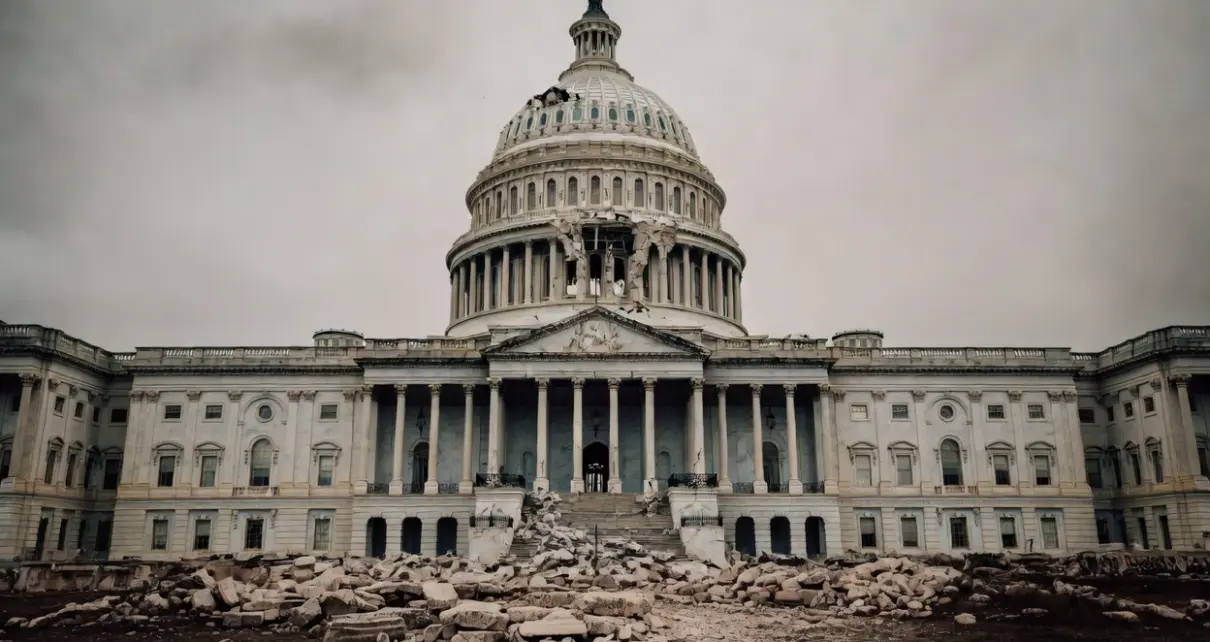
Understanding the Dynamics of American Foreign Policy
In recent discussions surrounding American foreign policy, particularly in relation to Iran, the narrative often shifts towards the underlying motivations and consequences of U.S. actions abroad. Patrick Henningsen, a prominent commentator and journalist, has articulated a critical perspective on what he describes as the "dying American Empire." This viewpoint challenges the traditional narrative surrounding U.S. interventions and raises questions about the implications of such policies on global stability and American credibility.
The Perception of a Dying Empire
Henningsen's argument hinges on the notion that the United States' influence on the world stage is waning. He posits that the continuous military engagements and the financial burdens associated with them have led to a significant erosion of America's soft power. The term "dying empire" encapsulates a broader critique of U.S. foreign policy, suggesting that the nation is overextending itself while failing to achieve its stated objectives. This perspective invites a reevaluation of how American power is projected and the long-term sustainability of its current approach to international relations.
Debunking the Narrative Surrounding Iran
One of the central themes in Henningsen's discourse is the narrative surrounding Iran. He argues that the mainstream media often perpetuates misleading information regarding Iran's geopolitical intentions and actions. Henningsen's recent visit to Iran has provided him with insights that challenge the prevailing narratives portrayed in Western media. He emphasizes the importance of understanding the complexities of Iranian society and governance, which are frequently oversimplified in discussions about U.S.-Iran relations.
The Financial Implications of Military Interventions
The financial ramifications of prolonged military engagements cannot be overlooked. Henningsen highlights that the costs associated with these interventions extend beyond immediate military expenditures, impacting domestic budgets and economic stability. The financial strain often leads to a reallocation of resources, diverting funds from critical areas such as infrastructure, education, and healthcare. This misallocation raises concerns about the long-term implications for American citizens and the overall economy.
The Coup Within the U.S.: A Shift in Power Dynamics
Henningsen also delves into what he refers to as a "coup within the U.S." This phrase reflects his belief that there is a significant shift occurring in the power dynamics within the country, characterized by the influence of various political and economic elites. He argues that this internal coup undermines democratic processes and prioritizes the interests of a select few over the broader populace. The implications of this shift are profound, as it raises questions about accountability, governance, and the future trajectory of American democracy.
Impact on Business and Market Dynamics
The intersection of foreign policy and market dynamics is a critical area of concern for investors and business leaders. Henningsen's insights suggest that the perception of instability in U.S. foreign policy can lead to volatility in global markets. Investors often react to geopolitical tensions, and uncertainty surrounding U.S. actions can result in fluctuations in stock prices, currency values, and commodity markets. Understanding these dynamics is essential for businesses operating in a globalized economy.
The Role of Media in Shaping Public Opinion
Henningsen's critique extends to the media's role in shaping public perception of foreign policy. He argues that the media often serves as a conduit for government narratives, which can obscure the truth and manipulate public opinion. This relationship raises ethical questions about journalistic integrity and the responsibility of media outlets to provide accurate, unbiased reporting. In an era where misinformation can spread rapidly, the role of media in fostering informed public discourse is more critical than ever.
Exploring Alternative Narratives
In light of these discussions, Henningsen advocates for the exploration of alternative narratives that challenge the dominant discourse surrounding U.S. foreign policy. He emphasizes the importance of engaging with diverse perspectives, particularly those that originate from the regions affected by American interventions. By broadening the conversation, stakeholders can gain a more nuanced understanding of the complexities involved in international relations and the potential pathways toward resolution.
Future Prospects for U.S.-Iran Relations
The future of U.S.-Iran relations remains uncertain, particularly in light of the ongoing tensions and the historical context of their interactions. Henningsen suggests that a reevaluation of diplomatic strategies is necessary to foster constructive dialogue and reduce hostilities. As economic sanctions and military posturing continue to shape the landscape, exploring avenues for cooperation and mutual understanding may prove essential for long-term stability in the region.
Conclusion: Navigating a Complex Landscape
Patrick Henningsen's insights into the complexities of American foreign policy, particularly concerning Iran, offer a thought-provoking perspective on the current geopolitical landscape. As the U.S. grapples with its role as a global power, the implications of its actions resonate far beyond its borders. Understanding the financial, political, and social ramifications of these policies is critical for stakeholders across various sectors. The discourse surrounding the "dying American Empire" serves as a call to critically assess the trajectory of U.S. foreign policy and its impact on both American citizens and the international community.